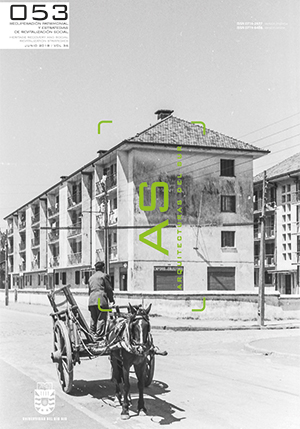
A methodology for sustainable architectural rehabilitation: The case of Chiloé’s palafito stilt houses
El caso de los palafitos de Chiloé
DOI:
https://doi.org/10.22320/07196466.2018.36.053.04Keywords:
Patrimonio cultural, metodología, desarrollo sostenible, viviendas vernáculasAbstract
This article presents the methodology used and results achieved in a study on strategies of sustainable architectural rehabilitation in a group of stilt house dwellings (palafitos) in the city of Castro. In addition to the concept of “sustainable architectural rehabilitation”, environmental, social and economic, as well as architectural factors are addressed. They are evaluated qualitatively and quantitatively with the understanding that they come together to reaffirm the value and identity of a culture. The case that was chosen, stilt houses in Castro from the Pedro Montt 2 neighborhood, presents the opportunity to analyze the evolution of fragile pieces of architecture with heritage value that are destined to change uses or be adapted to the transformations that the city and society have experienced in recent decades. Data was collected, and different stilt house units were inspected with regards to three variables (environmental, physical and socioeconomic). Then intervention proposals were outlined that preserve local values and attributes and open opportunities to improve social and economic conditions for their inhabitants.
Downloads
Downloads
Published
Issue
Section
License
The content of the articles published in each issue of Arquitecturas del Sur is the sole responsibility of the authors and does not necessarily represent the opinion of University of the Bío-Bío.
The authors will maintain their copyright; however, they will guarantee the journal the right to first publication and dissemination of their work. The publication of the article in Arquitecturas del Sur will be subject to the Creative Commons International license (CC BY-SA) that allows others to adapt: remix, transform and build on the material for any purpose, even commercially; share: copy and redistribute the material in any medium or format, as long as the authorship and first publication in this journal are acknowledged by citing them correctly, and their new contributions are under a license with the same terms.















 Programa de Información Científica/Concurso Fondos de Publicación de Revistas Científicas 2018/ Proyecto Mejoramiento de Visibilidad de Revistas UBB (Código:FP180007)