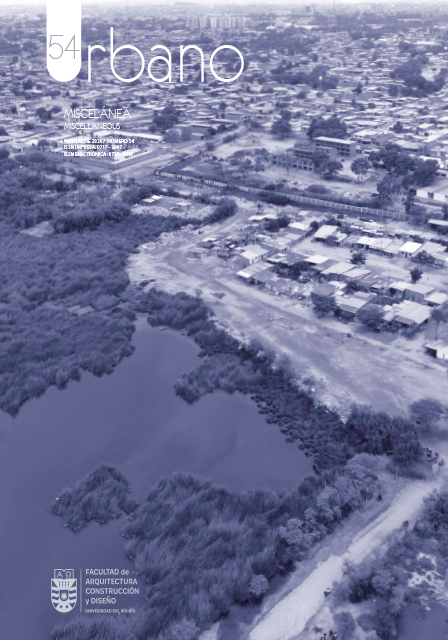
Editorial: Are you prepared for the unpredictable? Teaching urbanism in times of uncertainty
DOI:
https://doi.org/10.22320/07183607.2026.29.54.00Keywords:
-Abstract
Education for the urban planner has historically been structured on the assumption of well-defined problems, readable futures, and optimal technical solutions. However, climate and social crises challenge this assumption, and planning today is taking place in ever-changing scenarios, with incomplete information and conflicts of values that no model can resolve on its own. In Latin America, this tension has taken on concrete forms in cities exposed to multiple simultaneous hazards, with limited institutional capacity and a persistent gap between available knowledge and adaptation action. This editorial examines the implications of this situation for teaching urbanism and proposes criteria for an education process aligned with uncertainty.
Downloads
References
AVIN, U., y GOODSPEED, R. (2020). Using Exploratory Scenarios in Planning Practice. Journal of the American Planning Association, 86(4), 403–416. https://doi.org/10.1080/01944363.2020.1746688
BAGHERSAD, MILAD, ZOBEL, CHRISTOPHER W, FARAHANI, MEHDI H., y BEHARA, RAVI S. (2025). Trade-offs Between Equity and Efficiency in Prioritizing Critical Infrastructure Investments: A Case of Stormwater Management Systems. Production and Operations Management, 34(4), 590–611. https://doi.org/10.1177/10591478241243387
CAVAZOS, T., BETTOLLI, M. L., CAMPBELL, D., SÁNCHEZ RODRÍGUEZ, R. A., MYCOO, M., ARIAS, P. A., RIVERA, J., REBOTA, M. S., ALFARO, E. J., STEPHENSON, T.S., SÖRENSSON, A.A., CEREZO-MOTA, R., CASTELLANOS, E., LEY, D., y MAHON, R. (2024). Challenges for climate change adaptation in Latin America and the Caribbean region. Frontiers in Climate, 6. https://doi.org/10.3389/fclim.2024.1392033
EGERER, M., HAASE, D., MCPHEARSON, T., FRANTZESKAKI, N., ANDERSSON, E., NAGENDRA, H., y OSSOLA, A. (2021). Urban change as an untapped opportunity for climate adaptation. npj Urban Sustainability, 1(1), 22. https://doi.org/10.1038/s42949-021-00024-y
HAASNOOT, M., KWAKKEL, J. H., WALKER, W. E., y TER MAAT, J. (2013). Dynamic adaptive policy pathways: A method for crafting robust decisions for a deeply uncertain world. Global Environmental Change, 23(2), 485–498. https://doi.org/10.1016/j.gloenvcha.2012.12.006
HURLIMANN, A., COBBINAH, P. B., BUSH, J., y MARCH, A. (2021). Is climate change in the curriculum? An analysis of Australian urban planning degrees. Environmental Education Research, 27(7), 970–991. https://doi.org/10.1080/13504622.2020.1836132
Panel Intergubernamental sobre el Cambio Climático [IPCC]. (2023). Central and South America. In I. P. on C. C. (IPCC), (Ed.), Climate Change 2022 – Impacts, Adaptation and Vulnerability: Working Group II Contribution to the Sixth Assessment Report of the Intergovernmental Panel on Climate Change. Cambridge: Cambridge University Press. https://doi.org/10.1017/9781009325844.014
KRISHNAN, S., AYDIN, N. Y., y COMES, T. (2023). RISE-UP: Resilience in urban planning for climate uncertainty-empirical insights and theoretical reflections from case studies in Amsterdam and Mumbai. Cities, 141, 104464. https://doi.org/10.1016/j.cities.2023.104464
KWAKKEL, J. H., HAASNOOT, M,. y WALKER, W. E. (2015). Developing dynamic adaptive policy pathways: a computer-assisted approach for developing adaptive strategies for a deeply uncertain world. Climatic Change, 132(3), 373–386. https://doi.org/10.1007/s10584-014-1210-4
MANNUCCI, S., KWAKKEL, J. H., MORGANTI, M., y FERRERO, M. (2023). Exploring potential futures: Evaluating the influence of deep uncertainties in urban planning through scenario planning: A case study in Rome, Italy. Futures, 154, 103265. https://doi.org/10.1016/j.futures.2023.103265
MARIN, M. A. (2025). A gentle wave before the tsunami: addressing the wicked problem of cities and climate change through a pedagogical evaluation. Frontiers of Urban and Rural Planning, 3(1), 21. https://doi.org/10.1007/s44243-025-00072-3
PAUTA CALLE, F., SALAZAR, X., y GONZÁLEZ LLANOS, M. (2019). La integración de aprendizajes en la enseñanza de la planificación urbana articulada a contextos reales: Evaluación del proceso pedagógico en la formación del arquitecto a través de un caso de estudio. Arquitecturas del Sur, 37(56), 100–119. https://doi.org/10.22320/07196466.2019.37.056.07
POLIS. (14 de septiembre de 2026). POLIS – Nuevos Paradigmas de Sostenibilidad para Ciudades Latinoamericanas Inclusivas e Inteligentes. https://proyectopolis.org/
ROSALES PÉREZ, N., JOSÉ, J., y CHAPARRO, G. (2023). Pertinencia formativa del currículum de urbanismo: Análisis de las competencias para el siglo XXI. Bitácora Urbana Territorial, 33(I), 27–41.
SLOVIC, A. D., INDVIK, K., SORIANO MARTINS, L., KEPHART, J. L., SWANSON, S., ALEX QUISTBERG, D., … y DIEZ ROUX, A. V. (2024). Climate hazards in Latin American cities: Understanding the role of the social and built environments and barriers to adaptation action. Climate Risk Management, 45, 100625. https://doi.org/https://doi.org/10.1016/j.crm.2024.100625
STANTON, M. C. B., y ROELICH, K. (2021). Decision making under deep uncertainties: A review of the applicability of methods in practice. Technological Forecasting and Social Change, 171, 120939. https://doi.org/https://doi.org/10.1016/j.techfore.2021.120939
STAR, J., ROwland, E. L., Black, M. E., Enquist, C. A. F., Garfin, G., Hoffman, C. H., … y WAPLE, A. M. (2016). Supporting adaptation decisions through scenario planning: Enabling the effective use of multiple methods. Climate Risk Management, 13, 88–94. https://doi.org/https://doi.org/10.1016/j.crm.2016.08.001
TSCHAKERT, P., y DIETRICH, K. A. (2010). Anticipatory Learning for Climate Change Adaptation and Resilience.
VALDIVIA, A. (2023). Teaching of urbanism in Latin America. Narrative review in Scopus. Bitacora Urbano Territorial, 33(1), 15–26. https://doi.org/10.15446/bitacora.v33n1.104520
VARGAS, C., GOMEZ-VALENCIA, M., GONZALEZ-PEREZ, M. A., CORDOVA, M., CALIXTO CASNICI, C. V., MONJE-CUETO, F., … y CORONADO, F. (2022). Climate-resilient and regenerative futures for Latin America and the Caribbean. Futures, 142, 103014. https://doi.org/10.1016/j.futures.2022.103014
WALKER, W. E., HAASNOOT, M., y KWAKKEL, J. H. (2013). Adapt or perish: A review of planning approaches for adaptation under deep uncertainty. Sustainability (Switzerland), 5(3), 955–979. https://doi.org/10.3390/su5030955
WESSELINK, A., y HOPPE, R. (2011). If Post-Normal Science is the Solution, What is the Problem?: The Politics of Activist Environmental Science. Science, Technology, & Human Values, 36(3), 389–412. https://doi.org/10.1177/0162243910385786
Downloads
Published
Issue
Section
License
Copyright (c) 2026 Stella Stella

This work is licensed under a Creative Commons Attribution-ShareAlike 4.0 International License.
The content of articles which are published in each edition of Urbano, is the exclusive responsibility of the author(s) and does not necessarily represent the thinking or compromise the opinion of University of the Bio-Bio.
The author(s) conserve their copyright and guarantee to the journal, the right of first publication of their work. This will simultaneously be subject to the Creative Commons Recognition License CC BY-SA, which allows others to share-copy, transform or create new materials from this work for non-commercial purposes, as long as they recognize authorship and the first publication in this journal, and its new creations are under a license with the same terms.