
Changes in the productive space of the interior dryland. The case of the Yumbel commune 1976-2016
DOI:
https://doi.org/10.22320/rte.vi39.3397Keywords:
Productive restructuring, Neoliberal openness, Rural development, Territorial configuration, Local managementAbstract
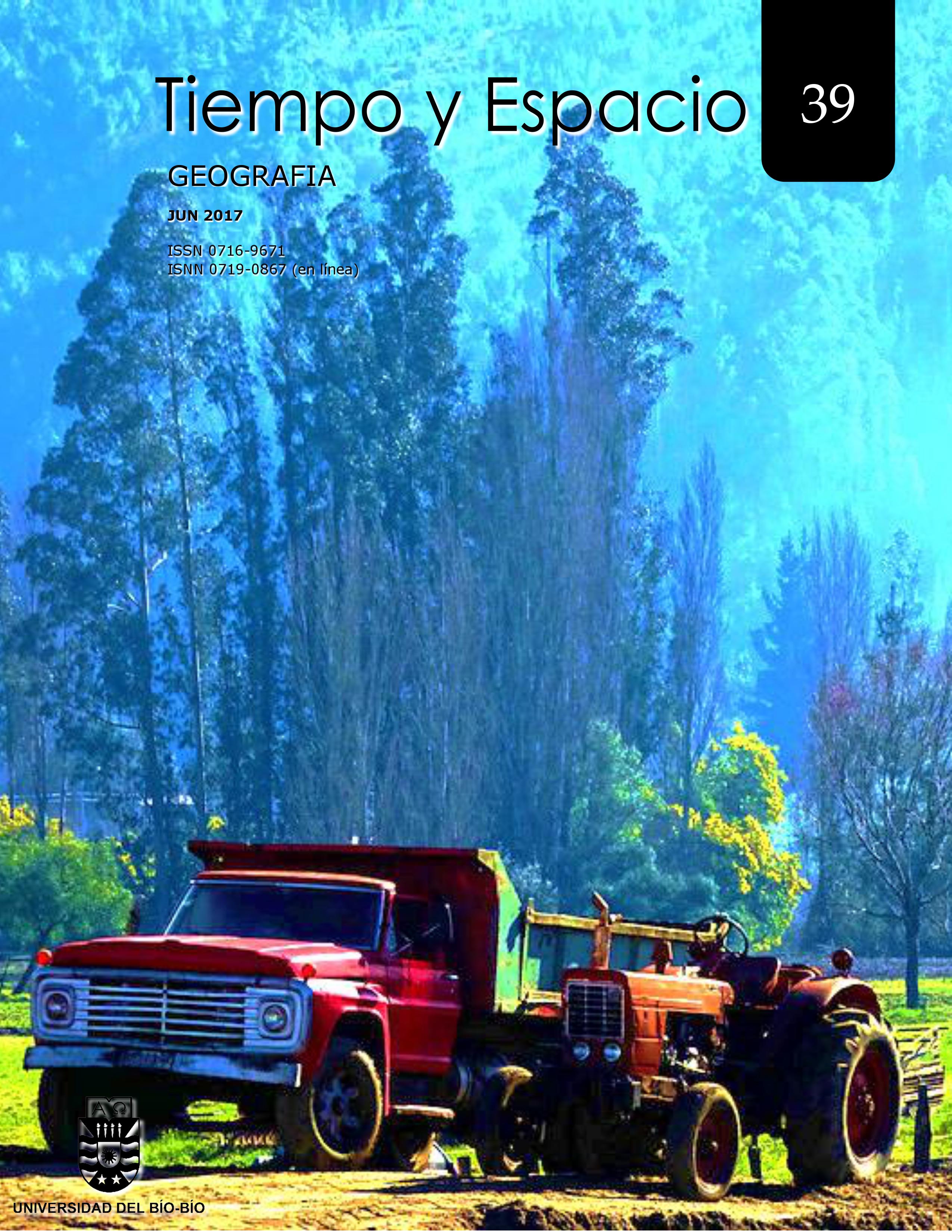
From the neoliberal opening in Chile begins a productive restructuring throughout the national territory. One of the policies that have deepened changes in the rural environment of the interior dryland is the Decree Law No. 701 of Forestry Development that has led to an increase in the use of forest land involving a series of changes in the productive sector including agriculture and livestock. In the rural territory of Yumbel, the Peasant Family Farming and the Small Agriculture predominate, who have lived the journey of the transformations in the forms of production, the ways of approaching the rural development and the mutations in the territorial configuration. Aspects that are presented as a challenge for local management and the social fabric of the commune. This research analyzes the changes in the productive structure, the modifications in the forms and contents of the geographical space and synthesizes the behavior of the management of agricultural activities that are associated to these processes in the fields of operation of technical assistance and peasant family agriculture; articulation and associativity; marketing and diversification and territorial advantages and restrictions.
Downloads
Published
Issue
Section
License

This work is licensed under a Creative Commons Attribution-NonCommercial 4.0 International License.
The authors retain the copyright and grant Tiempo y Espacio Journal the right of first publication, with the work registered under the Creative Commons attribution license, which allows third parties to use what is published as long as they mention the authorship of the work and the first publication in this journal, and that this use is not for commercial purposes.



